Espace Killy — now formally rebranded as 'Tignes–Val d'Isère' in 2019 but still known by its original name to a generation of skiers — is one of the most prestigious ski areas on the planet, with over 300km of lift-linked piste, two glaciers, and a reputation for guaranteed high-altitude snow that is essentially unrivalled in the French Alps. The two constituent resorts, Tignes and Val d'Isère, could hardly be more different in character, and the choice between them is one of the sharpest in French Alpine property.
Tignes is a collection of five purpose-built villages strung along a high-altitude plateau and lake — efficient, functional, and positioned primarily for serious skiers who want maximum vertical per euro. Tignes Val Claret (2,150m) and Tignes le Lac (2,100m) sit as high as any resort in the Alps. Val d'Isère, at 1,850m, is the Olympic legacy resort, the home of Jean-Claude Killy, and a destination that has carefully maintained more traditional village aesthetics alongside its serious reputation for advanced skiing and strong luxury real-estate prices.
This article walks through the buyer comparison in detail: access, village character, the skiing itself, food and lifestyle, 2026 property prices, rental yield reality, and our practical recommendation on which kind of buyer belongs in which resort. Both deliver world-class skiing and strong long-term property credentials — but the choice matters, because the day-to-day experience of ownership is very different between them.
Access
Getting There: Two Long Drives from Geneva
Both Tignes and Val d'Isère sit at the end of a long winding road that climbs from Bourg-Saint-Maurice up the Isère valley to the resorts above 1,800m. The road is well-maintained but slow — expect 45 minutes to an hour from Bourg-Saint-Maurice to either resort, on top of whatever it took you to reach Bourg in the first place. From Geneva Airport both resorts are approximately 2.5 hours by road (180km), slightly longer in bad weather. Chambéry is a touch faster at roughly 2 hours (90km).
The TGV station at Bourg-Saint-Maurice is the rail gateway for both resorts, connected directly to Paris, London (via Eurostar), Brussels and Amsterdam during the ski season. From Bourg, transfer buses and private taxis run frequently up to both Tignes and Val d'Isère, typically adding 45-60 minutes to the overall journey. For car-free travellers this is a workable if not spectacular rail-to-slopes story — materially better than driving in a winter blizzard, meaningfully slower than the funicular into Arc 1600 (which stands alone as the fastest rail-to-slopes transfer in the Alps).
Val d'Isère sits at the end of the valley road, which becomes a winter dead-end after the seasonal closure of the Col de l'Iseran pass over into the Maurienne valley. This genuinely contributes to Val d'Isère's 'exclusive' feeling — it is literally the last village on the road. Tignes is reached slightly earlier on the same route and has a few hundred metres of extra road on top leading to the highest village, Val Claret. Neither has airport-level private access — there is no altiport like Courchevel's — so helicopter transfer from Chambéry or Geneva is the ultra-premium access option for buyers who need it.
For most buyers, the access picture is straightforward: 2.5 hours from Geneva or Chambéry, 45-60 minutes on top of TGV rail, and a scenic valley drive that becomes more impressive the higher you climb. The remoteness is part of the attraction — both resorts feel genuinely 'away' from the lowland world, which is a feature for owners looking for the traditional Alpine escape feeling.
300 km
Total Espace Killy (Tignes–Val d'Isère) piste network accessible from either resort on one lift pass
3,456 m
Top of the Grande Motte glacier above Tignes — one of the highest and most reliable ski altitudes in the French Alps
€8-15k/m²
Tignes 2026 new-build price range — meaningfully below Val d'Isère for comparable ski access
€15-22k/m²
Val d'Isère 2026 new-build price range — top-tier French Alpine resort pricing
Villages
The Character Gap: High-Altitude Efficiency vs Olympic Heritage
Tignes is a resort that unapologetically prioritises function over traditional charm. The five Tignes villages were purpose-built from the 1950s onwards after the original Tignes village was flooded by the Chevril dam in 1952, and the architecture reflects its era: efficient, functional, high-rise apartment blocks designed for ski-in/ski-out convenience and reliable snow access. Tignes Val Claret and Tignes le Lac form the dense resort core at the highest altitudes, while Tignes 1800 and Tignes les Brévières offer traditional valley-village alternatives lower down for buyers who prefer a more traditional feel.
The functional 1960s-70s concrete of the high Tignes villages divides buyers sharply. For some, it is honestly ugly — a legacy of a particular era of French planning that has aged imperfectly. For others, it is a feature not a bug: you are paying for the skiing and the altitude, not for village aesthetics, and the trade-off delivers the most reliable ski-in/ski-out convenience in the French Alps at price points meaningfully below the prettier competitors. A substantial building refurbishment programme has softened the worst of the original architecture across the last decade, and the resort core is progressively becoming more pedestrian-friendly.
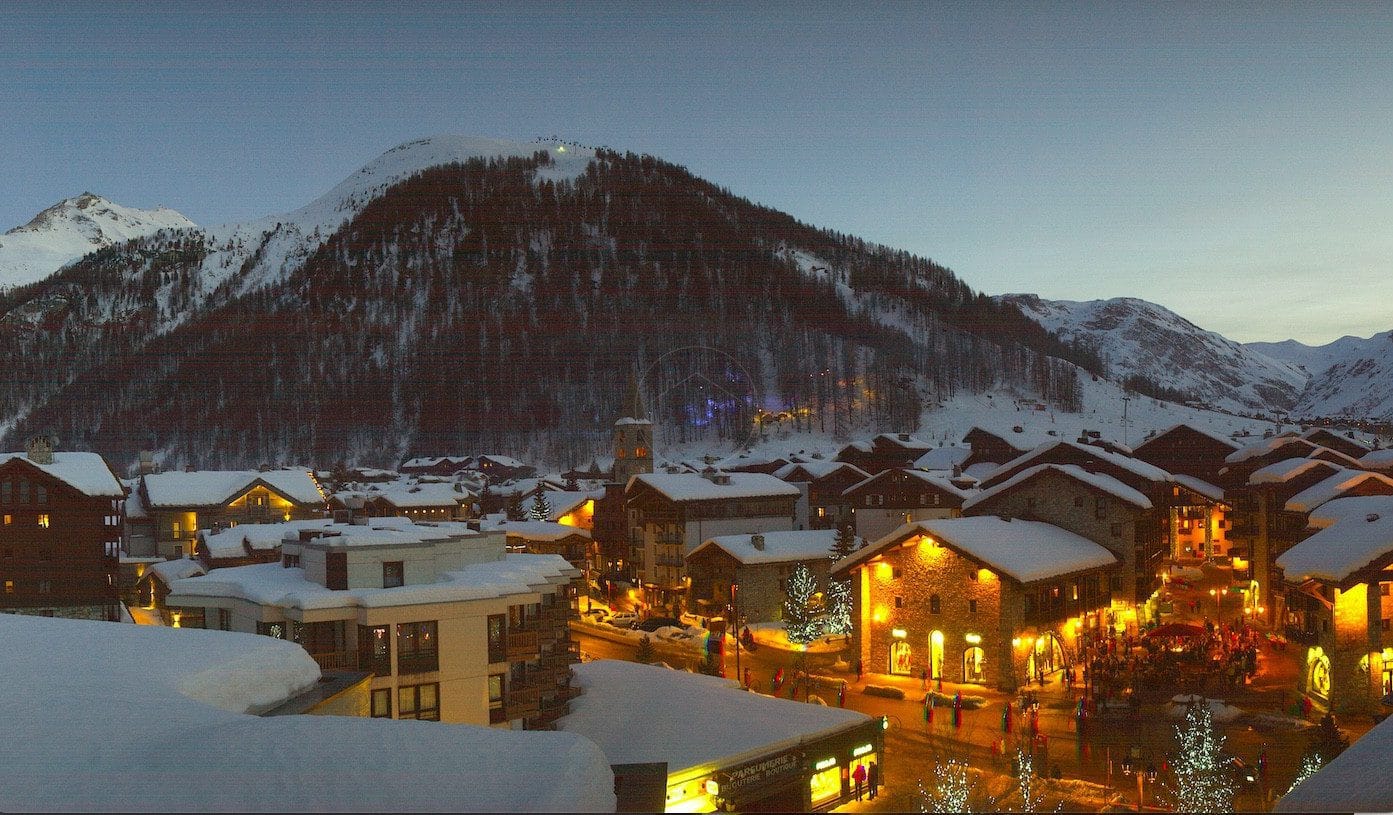
Val d'Isère is an entirely different proposition. The village has carefully maintained a more traditional Savoyard aesthetic — stone and wood facades, a recognisable old-town core around the church, and a sophistication of atmosphere that has survived the resort's transformation into one of France's most prestigious destinations. Val d'Isère's association with Jean-Claude Killy (born here in 1943, winner of three Olympic gold medals in 1968) and the 1992 Winter Olympics downhill course has built a heritage story that Tignes cannot match. The result is a village that feels like a village, with the kind of restaurants, boutiques and small-hotel infrastructure that Tignes lacks.
Our shorthand: Tignes trades aesthetics for altitude and price. Val d'Isère trades price for aesthetics and heritage. Both decisions are defensible, and the correct choice depends entirely on what you value in an Alpine village.
Tignes vs Val d'Isère: Buyer Priority Fit
Price value
Village character
Altitude & snow reliability
Rental yield (net)
Dining & restaurants
Brand prestige
2026 Prices
Property Pricing: The Real 2026 Numbers
Val d'Isère's 2026 property prices reflect its blue-chip positioning. New-build apartments in prime village-centre locations trade at €15,000-€22,000/m², with the very best ski-in/ski-out addresses reaching €25,000+/m². A two-bed new-build in a good Val d'Isère position starts from around €1.1M, a three-bed from €1.7M, and four-bed family apartments from €2.5M upward. Resale inventory in renovated traditional chalets runs €12,000-€18,000/m². Trophy chalets in prime positions comfortably reach €8M-€20M. Val d'Isère sits firmly in the top tier of French Alpine property alongside Courchevel 1850 and Megève.
Tignes' pricing is meaningfully more accessible. New-build apartments in the high villages (Val Claret, Le Lac) run €8,000-€12,000/m², with prime ski-in/ski-out positions at €13,000-€15,000/m². Entry-level one-bedroom new-builds start from around €380,000, two-beds from €580,000, three-beds from €850,000. Resale inventory is plentiful and often represents exceptional value for the altitude and ski access on offer — resale one-beds in the high Tignes villages can be secured from €220,000-€350,000 for well-positioned units in need of light refurbishment.
The VAT reclaim opportunity applies equally in both resorts. French VEFA new-build classified into managed rental qualifies for 20% VAT recovery on the gross purchase price. On a Val d'Isère €1.5M apartment this is roughly €300,000 recovered; on a Tignes €700,000 apartment it is roughly €140,000. Notaire fees on new-build run 2-4% versus 7-9% on resale. Our new-build ski apartments page lists current Espace Killy VEFA inventory with full pricing, and our buying process guide walks through the VEFA timeline. For buyers who are value-focused, Tignes is genuinely one of the best ski-altitude-to-price ratios in the entire French Alps.
“Tignes is the investor's Espace Killy choice — the highest snow reliability, the strongest yield story and the best value per square metre. Val d'Isère is where you buy for the village, not the spreadsheet.”
Skiing
The Espace Killy Experience: Glaciers, Signature Runs and Altitude
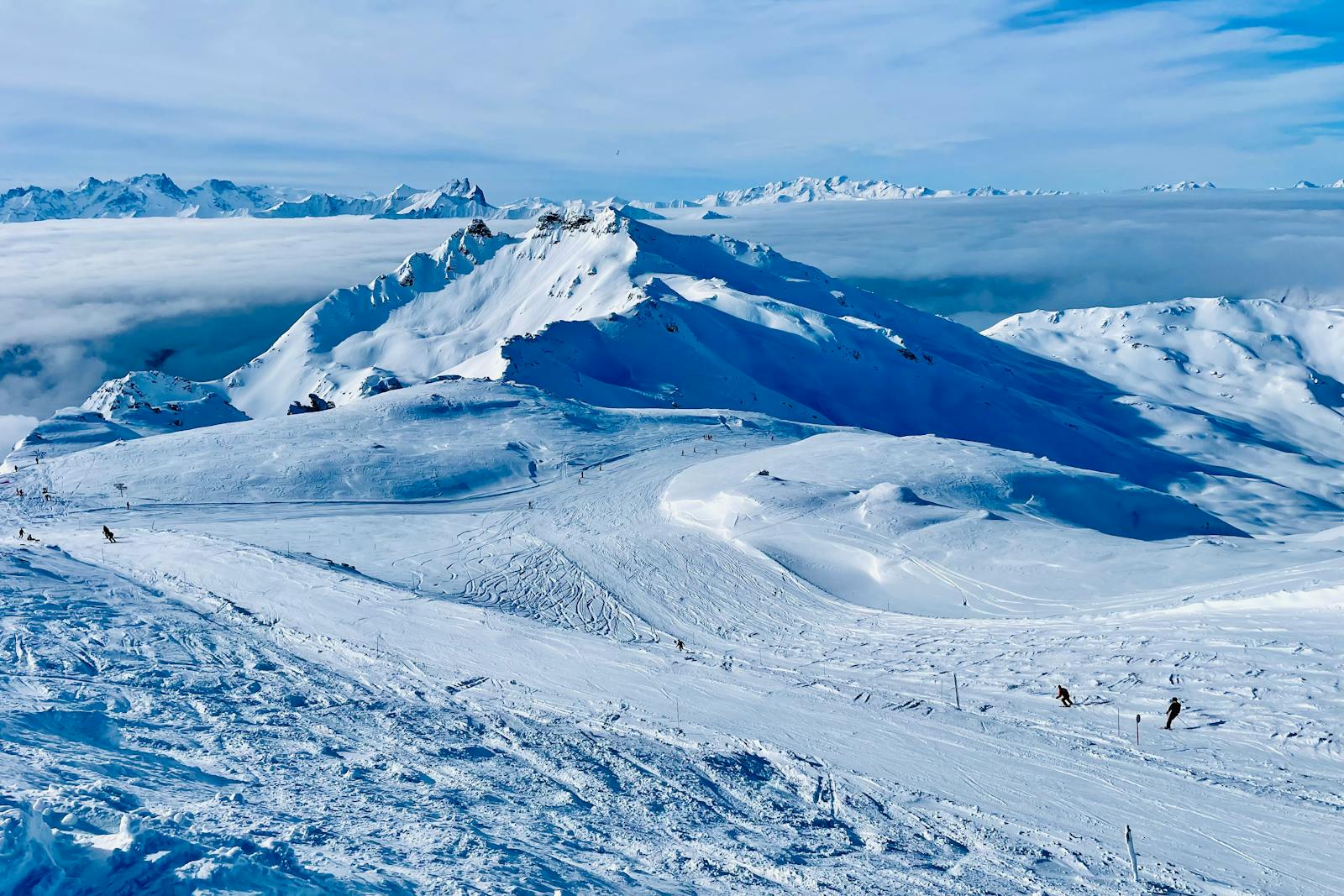
Both resorts share the full Espace Killy lift-linked domain: 300km of piste across the Tignes and Val d'Isère sides, two glaciers (Grande Motte above Tignes at 3,456m, and Pissaillas above Val d'Isère at 3,300m), and a collection of signature runs that are on the bucket list of every serious European skier. The La Face de Bellevarde is the 1992 Olympic men's downhill course and remains one of the most demanding recorded pistes in the world when set up in race condition. The Grande Motte glacier runs deliver reliable snow deep into spring and into summer in normal years.
Tignes' local terrain is genuinely extraordinary. The Grande Motte glacier alone is a headline attraction, and the high-altitude base means the resort has some of the most reliable early and late season snow of any French resort. The resort is particularly strong for advanced and expert skiers — wide open high-altitude bowls, some of the best off-piste in the French Alps on good days (with guide), and a culture of serious skiing that permeates the resort. Tignes also has a strong terrain-park and freestyle scene for younger skiers and snowboarders, supported by genuinely world-class freestyle events each season.
Val d'Isère's local terrain is broader and more varied. The resort sits slightly lower at 1,850m base but has access to equivalent high-altitude terrain at the top, with the Pissaillas glacier providing snow reliability alongside the Grande Motte. Val d'Isère's local intermediate cruising is arguably slightly superior to Tignes' — wider red runs, more variety of aspect, and a gentler progression from beginner to expert terrain. For mixed-ability groups, Val d'Isère typically offers a more satisfying day-to-day experience than the slightly narrower Tignes local offering.
Both resorts share access to the full 300km domain, so serious skiers end up using whichever side conditions favour on a given day. For a full week of skiing, most visitors alternate freely. The practical day-to-day experience is closer than the surface comparisons suggest — both are genuinely world-class skiing destinations, and the choice between them is often settled by village preference rather than skiing quality.
| Criterion | Tignes | Val d'Isère | Advantage |
|---|---|---|---|
| 2026 new-build €/m² | €8,000-€15,000 | €15,000-€22,000+ | Tignes (value) |
| Base altitude | 2,100m (Le Lac) | 1,850m | Tignes (snow) |
| Village character | Purpose-built | Traditional | Val d'Isère |
| Rental yield (net) | 3-4% | 2.5-3.5% | Tignes |
| Dining scene | Functional | 2 Michelin stars | Val d'Isère |
| Best for | Investors, skiers | Personal use, UHNW | Buyer type |
Lifestyle
Food, Après and Off-Mountain Life
Val d'Isère's food and lifestyle scene is one of the strongest in the French Alps, just below the Courchevel 1850 super-premium tier but broader in range. The resort has several genuinely excellent restaurants — L'Atelier d'Edmond (2 Michelin stars) is the headline act, with the Table de L'Ours and Le Bistrot Gourmand rounding out a strong upper-middle tier. The village has a genuine restaurant scene that works at every price point, with good traditional Savoyard bistros (La Ferme de l'Adroit) alongside modern international options. Après-ski is lively and accessible — La Folie Douce Val d'Isère is one of the most famous on-mountain après venues in the Alps, and the village après scene is genuinely convivial.
Tignes' food and lifestyle scene is functional rather than sophisticated. The resort has a small number of genuinely good restaurants — Le Panoramic on the Grande Motte glacier for mountain dining, Le Caveau in Val Claret, and a handful of good traditional Savoyard options — but the overall dining inventory is smaller and less varied than Val d'Isère's. Après-ski skews younger and more energetic: The Loop Bar in Val Claret, La Folie Douce Tignes (yes, there is one here too, on the Toviere ridge above Tignes le Lac), and a strong ski-bum bar scene that many serious skiers actively prefer to Val d'Isère's slightly more polished equivalent.
For mixed-age families and groups of friends, Val d'Isère typically delivers a more satisfying week of non-ski experience. For younger groups, hardcore skiers, and buyers who prioritise maximum ski time and minimal fuss, Tignes is often the better fit. Both resorts offer strong summer activities now — MTB, hiking, glacier skiing, lake activities at the Tignes lake — but the village atmospheres remain genuinely different off-piste.
1952
Original Tignes village flooded
The original Tignes village is flooded by the Chevril dam; construction of new high-altitude villages begins immediately above the new lake.
1968
Jean-Claude Killy wins 3 Olympic golds
Val d'Isère's Jean-Claude Killy wins three Olympic golds at Grenoble, cementing Val d'Isère's reputation as France's premier Olympic ski destination.
1992
Albertville Winter Olympics
Val d'Isère hosts the men's downhill event on La Face de Bellevarde, a course still skied by visitors today as one of Europe's most demanding pistes.
2004
Grande Motte modernised
Tignes upgrades the Grande Motte glacier access, reinforcing its reputation as the highest-reliability ski resort in France.
2019
Espace Killy rebranded
The Espace Killy domain is rebranded as 'Tignes-Val d'Isère' in 2019, though the original Espace Killy name persists among regular skiers.
2025-26
Major lift upgrade wave
Both resorts invest heavily in modern detachable gondolas and chairlifts ahead of the 2030 Olympic bid, further entrenching the domain's premium positioning.
Rental Yield
Investment Maths: Realistic Rental Returns
Val d'Isère new-build apartments typically deliver 2.5-3.5% net rental yields, driven by very high peak-week rates that partially offset the high acquisition cost. The best-positioned addresses can reach 4% net in exceptional cases, but the disciplined planning number is 3%. Luxury chalets at the top end operate closer to a 1.5-2.5% net yield — they are primarily personal-use trophy assets with rental offset, not yield-first investments. Val d'Isère's rental demand is strong, international, and relatively resilient to downturns; peak-week bookings are reliably filled 6-12 months in advance.
Tignes delivers 3-4% net rental yields on well-positioned new-build apartments, reflecting the more accessible purchase price and the high-altitude snow reliability that keeps the season long. The yield advantage over Val d'Isère is real and meaningful — for investor-minded buyers who do not need the Val d'Isère village character, Tignes offers a measurably better yield profile at a lower absolute price point. Summer activity (glacier skiing, hiking, lake activities) supports yields 0.3-0.6 percentage points over winter-only comparable resorts.
For non-resident mortgages, 2026 conditions remain favourable in both resorts. Non-resident buyers typically access 70-80% LTV with prime profiles reaching 85%. Current fixed rates run 3.4-4.5%. Our French mortgage calculator models both scenarios. The LMNP furnished rental regime plus 20% VAT reclaim on new-build make post-tax returns materially better than gross yields suggest in both resorts. For investor-first buyers we typically lean toward Tignes; for personal-use-first buyers with a rental offset goal, Val d'Isère.
The Verdict
Who Belongs in Tignes, Who Belongs in Val d'Isère
Our practical recommendation is clear once you know what a buyer actually values. For investor-minded buyers focused on yield, altitude reliability, and relative value, Tignes is the correct choice. The high-altitude snow guarantee, the strong 3-4% net yields, the more accessible absolute price point, and the improving resort aesthetics combine to make it one of the best pure-investment propositions in the French Alps. It is also the right choice for hardcore skiers, freestyle-oriented younger families, and buyers who rate ski time above village aesthetics.
For personal-use-first buyers who want the full Olympic-heritage village experience, the strong restaurant scene, and the blue-chip brand credibility, Val d'Isère is the correct choice. The village character, the dining ecosystem, and the traditional Savoyard aesthetic are genuinely superior to Tignes, and the premium price is the price of that experience. Val d'Isère is also the right choice for mixed-ability family groups where the non-skier experience matters meaningfully alongside the ski day.
Both resorts share access to the full Espace Killy domain, so the skiing day-to-day is effectively identical across the two. The real choice is between village atmosphere, price point, and investment priorities. The Domosno team can arrange side-by-side viewings in both resorts during a single trip — they are roughly 10 minutes apart by road — and the contrast is genuinely instructive. Our Tignes property page and Val d'Isère property page list current inventory, and we are happy to walk you through specific options in detail.
FAQs
Frequently Asked Questions
Can I ski both resorts on one lift pass?
Yes. The Espace Killy lift pass (now branded Tignes-Val d'Isère) gives full access to both resorts via the lift interconnection. Most owners buy season passes that cover the full 300km domain and alternate sides freely based on conditions and mood. The resorts are lift-linked seamlessly; you can ski from one to the other without removing your skis for most of the day.
Which resort has better snow reliability?
Tignes has a slight edge because of its higher base altitude (Le Lac at 2,100m, Val Claret at 2,150m) and the Grande Motte glacier providing reliable ski terrain from early November to late May in normal seasons. Val d'Isère at 1,850m base is still genuinely high by French standards and benefits from its own glacier (Pissaillas), so both are exceptional by national standards. The difference is meaningful at the margins but small in typical seasons.
Is Tignes really meaningfully cheaper than Val d'Isère?
Yes. On a like-for-like basis — same altitude, same ski-in/ski-out position, same new-build quality — Tignes typically runs 30-45% below Val d'Isère per square metre. The price gap reflects village character, brand premium, and Val d'Isère's deeper dining and hospitality ecosystem. Investor-minded buyers who are not paying for the village atmosphere find the Tignes value proposition genuinely compelling.
What's Val d'Isère really like as a village?
Val d'Isère has carefully preserved a traditional Savoyard feel in its village centre — stone and wood facades, a recognisable old-town core around the church, and a sophistication that has survived the resort's growth. It is not authentic in the Saint Martin de Belleville sense (it is still a major ski resort), but the village atmosphere is genuinely pleasant in a way that is unusual for a resort of its size, and the restaurant and hotel ecosystem is among the strongest in the French Alps.
Which resort is better for families with young children?
Val d'Isère typically wins for family groups because of the broader restaurant scene, better village atmosphere, and more variety of non-ski activities. Tignes is a good family resort in its own right — excellent ski schools, family-focused infrastructure in the high villages — but the day-to-day village experience outside the skiing is narrower. First-time French Alpine family buyers often prefer Val d'Isère; experienced skiing families with older children often find Tignes more satisfying.
What's the rental yield in each resort?
Tignes typically delivers 3-4% net yields on well-positioned new-build apartments. Val d'Isère typically delivers 2.5-3.5% on equivalent units — the price premium partially offsets the higher nightly rates. Blue-chip Val d'Isère addresses can reach 4% net in exceptional cases. For yield-first investors, Tignes is the better choice; for personal-use-first buyers with rental offset, Val d'Isère.
Can non-residents get French mortgages in both resorts?
Yes. Non-resident buyers typically access 70-80% LTV in both resorts, with prime profiles reaching 85%. Current fixed rates run 3.4-4.5% for non-residents, with Val d'Isère's higher absolute price points requiring stronger income and asset positions for the affordability stress test. The mortgage process itself is identical — the difference is in the underwriting thresholds for the very top price tier.
How do I compare specific properties in both resorts?
The Domosno team has been placing buyers into Espace Killy property since 2005 and can arrange side-by-side viewings in both resorts during a single trip (they are 10-15 minutes apart by road). Our Tignes and Val d'Isère property pages list current inventory, and we can set up detailed video tours and remote pre-qualification for buyers who are not yet ready to fly out.